
A Life Rewritten:
Living Fully with Dermatomyositis
After a traumatic birth and a grim prognosis for her son Layton, who was born with a severe form of osteogenesis imperfecta, Angela Diven found hope in specialized OI treatment and shared with PatientWing how she has dedicated her life to helping Layton live fully, fiercely, and joyfully while raising awareness for families affected by rare conditions.
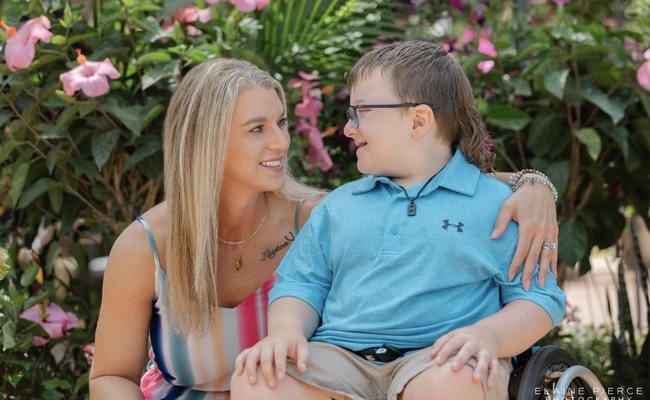
A Life They Said He Wouldn’t Have: Layton’s Story
Angela Diven still remembers the moment her world changed. Immediately after delivering her son, Layton, via emergency cesarean-section (C-section) her husband, Chad, had a look she’d never forget. “He showed me a picture of our baby because I hadn’t seen or held him yet,” she recalled. “He wasn’t breathing, and his legs were deformed. I could tell he was in pain.”
Two hours later, Chad returned with a devastating update after being rushed to the Neonatal Intensive Care Unit (NICU). “The doctor said Layton wasn’t going to live,” she recalled.
Angela, a radiologic technologist, had suspected something wasn’t quite right as early as 14 weeks into her pregnancy. As an experienced medical professional, she had hoped the early scans were inconclusive, just a fluke of timing. But as the weeks progressed, Layton’s limb measurements fell further and further behind, and the family was referred to maternal-fetal medicine specialists.
“They mentioned the possibility of dwarfism and even osteogenesis imperfecta. But there were no fractures visible at the time,” Angela said. “Still, in my gut, I knew.”
Living Through Osteogenesis Imperfecta Diagnosis
Despite a high-risk pregnancy, Angela hoped for a natural birth experience. But complications escalated quickly, she developed pre-eclampsia and had to undergo an emergency C-section. Layton wasn’t breathing when he was born, and worse still, his bones were breaking as he entered the world.
“We later learned he had old and new fractures, his body was so fragile. The doctors told us they believed it was Type II OI, the most severe and typically lethal form,” Angela said. “They didn’t think he’d make it through the night.”
Angela was desperate to see her son before he passed. “Due to my pre-eclampsia, I couldn’t leave the floor, and Layton was in critical condition with multiple fractures, so he couldn’t move. I pushed the staff to let me see him,” she said. “He was moaning in pain. It was unbearable, I couldn’t comfort him because if I held him, I could hurt him.”
But Layton survived the night. Then three days. And gradually, his diagnosis shifted from Type II OI to Type III osteogenesis imperfecta, a severe but survivable form of the disorder. It was the first glimmer of hope after weeks of darkness.
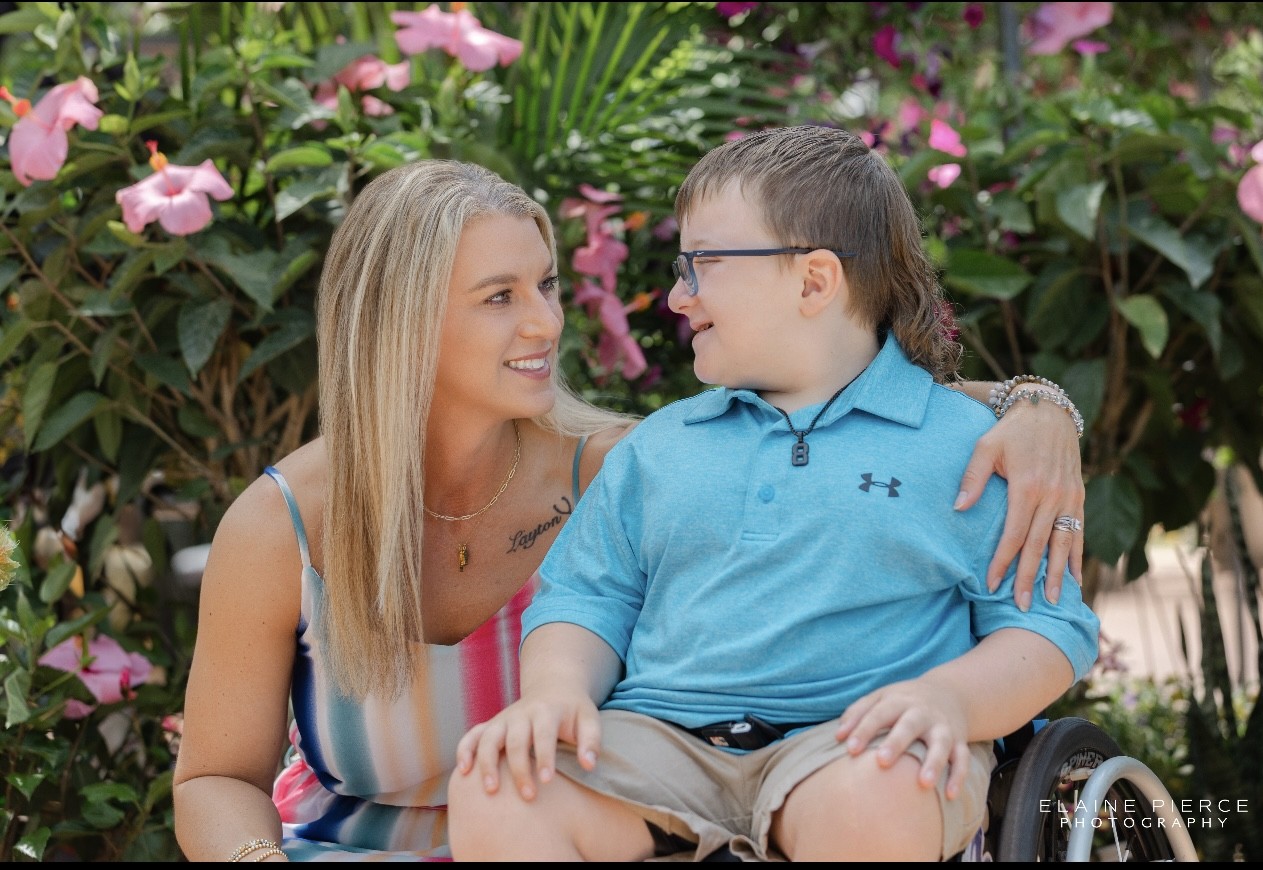
Finding Osteogenesis Imperfecta Treatment
Angela discovered a dedicated team for osteogenesis imperfecta treatment at Children’s Hospital & Medical Center in Omaha, Nebraska, through her research. “That first night after being treated in Nebraska, Layton slept better. He ate better. The pain relief helped. It was the first time someone gave us hope,” she said.
She speaks openly about the postpartum depression and suicidal thoughts she experienced after Layton’s birth. “I had pictured a different future, a little boy who’d play baseball like his dad. I felt like I had lost all of that in an instant,” she said. “But when I found that hope in Nebraska, it clicked. I wanted to be the best special needs mom I could be. This is my assignment, and I’ll do it with everything I have.”
Angela is now Layton’s full-time caregiver. She administers his port medications, manages his pain protocol, and coordinates with doctors in both Nebraska and Louisiana. “I didn’t want to do all of it at first,” she admitted. “But I knew I had to. I was built for this.”
Through living with osteogenesis imperfecta: Layton’s journey demonstrates how coordinated, multidisciplinary medical care can transform a life-threatening prognosis into steady progress.
Living with Osteogenesis Imperfecta: Layton’s Journey Day to Day
Layton is now 11 years old. He has experienced many fractures and severe pain throughout his life. To date, Layton has undergone 18 surgeries, including hernia repairs, port replacements, rod placements or revisions to his long bones, critical in helping prevent recurring fractures.
But regardless, he is a joyful, determined child who lives each day to the fullest. While living with osteogenesis imperfecta, Layton attends school with an aide and plays wheelchair baseball on Friday nights. “He knows he’s different, and he’s okay with it,” Angela said. “He’s grateful. When he feels good, those moments are extra sweet.”
Advocacy, Acceptance, and New Osteogenesis Imperfecta Treatment Research
Angela speaks with clarity and resilience, which only comes from surviving the unimaginable. “It was the worst thing that ever happened to me, and the best,” she said. “God prepared me to be his mom, Layton gave me purpose. I want to live forever to be here for him.”
She continues to share their story publicly to raise awareness, support other parents, and help shift how healthcare providers respond to rare diagnoses. “We need more education, early genetic testing, more compassion,” she said. “When I started this journey, I didn’t know anyone else was going through it. Now I know the power of community.”
As she advocates for more awareness and better care for children with OI, she also shares a simple message with parents. “You may feel broken. You may feel like your world has ended. But I promise you, it hasn’t. Your child can still have a beautiful life. It will just look different, and that’s okay,” she said.
A New Hope : Developing New Treatments for OI
At PatientWing, we understand the challenge of raising a child with a rare condition like OI, which is why we highlight experiences like Angela’s on our platform.
Through these patient stories, we aim to amplify the voices of advocates pushing for improved OI treatment, raise awareness around osteogenesis imperfecta clinical trials, and encourage stronger patient participation in rare disease research.
If you or your family want to help advance new osteogenesis imperfecta treatment options, consider exploring clinical studies for OI. Speak with your healthcare provider today or reach out to the PatientWing team to learn more about upcoming research opportunities and how you can get involved.
"When I started this journey, I didn’t know anyone else was going through it. Now I know the power of community."— Angela Diven
 About Angela DivenAngela Diven is a mother, medical professional, and fierce advocate for her son, Layton. When she gave birth, doctors believed Layton wouldn’t survive the night. Born with multiple fractures and later diagnosed with a severe form of osteogenesis imperfecta (OI), Layton’s early days were marked by pain, uncertainty, and fear. But against all odds, he lived, and continues to thrive. Angela shares how her medical background, relentless advocacy, and unshakable love have shaped a new life for both of them. From navigating trauma and postpartum depression to finding specialized care and building a full life for Layton, this is a story about hope, strength, and what it truly means to be a mother.
Related Resources
Curated stories, expert voices, and research all connected to this condition.


