From Patient to Purpose:
How One Diagnosis Shaped a Career in Patient Advocacy
Rebecca Uhl spent the first 21 years of her life not knowing her heart was running out of room. A CT scan changed everything. What followed was a surgery, a recovery that tested her, a mentor who believed in her, and a career she built from the inside out. Today she sits on the other side of the table, making sure the patients she works with never have to figure it out alone.
Rebecca Uhl was 21 when someone finally asked a question she had never thought to ask herself. What are you going to do about that dent in your chest?
Her godmother, a nurse, said it plainly. Rebecca had grown up around medicine. Her mother worked the front desk at a pediatrics office, and somehow, no one had ever flagged it as anything serious. Her first thought was the same one she'd had her whole life: this is just how I am. But she went and got a CT scan. When the pulmonologist pulled up the image, everything shifted.
"The doctor was explaining it to me that your heart needs to beat fully, and your sternum is pressing in on it," Rebecca recalls. "It was also compromising my lungs."
What she was looking at was pectus excavatum, a congenital chest wall condition where the sternum sinks inward toward the heart and lungs. She had always been the slowest kid in gym class, never able to keep up. She hadn't thought much of it. Seeing it on that scan brought reality crashing down.
She was scared and nervous, but willing to do whatever it took to live the best life possible.
The Decision
Rebecca researched everything she could understand about this condition until she found the best answer available. One name that kept coming up was Dr. Dawn Jaroszewski, a cardiothoracic surgeon at Mayo Clinic in Phoenix, Arizona. Dr. J.
Rebecca had already decided.
On June 21, 2013, Rebecca had the Nuss procedure at Mayo Clinic, a minimally invasive surgery where metal bars are inserted beneath the sternum and, like braces reshaping a mouth, slowly correct the chest wall over three to four years.
The recovery was not easy. Rebecca dealt with a pneumothorax and a pleural effusion on separate occasions. Once during a routine follow-up, she was symptomatic and had an EKG, which later revealed an electrical pathway conductivity issue. Had she been anywhere else in the world, it may have gone a very different way. Once she started feeling better, she pushed too hard and too fast; back at the gym, back on the longboard, back to proving something to herself. The setbacks were entirely her own doing. She just wanted to live, and no one was going to slow her down. Dr. J tried.
Some of the closest friends she has ever made came from those early days, people who found each other through a condition most of the world had never heard of, and who have shown up for each other ever since. Through all of it, Rebecca never once thought she had made a mistake. Not for a second. She knew she had to get this done. She knew it was the path forward. And somewhere in the middle of all of it, she knew she could take this experience and help other people with it.
Dr. J
There is no clean professional title for what Dr. Dawn Jaroszewski is to Rebecca now. Surgeon. Mentor. Neither word quite covers it. She was losing the fight with her recovery when Dr. J stepped in and gave her something to work for, inviting her to intern in Phoenix the following summer. It was a rare thing, born out of circumstance and trust.
Together they made a series of videos to walk patients to and from the operating room so they would feel supported every step of the way. Dr. J also brought Rebecca onto a peer-reviewed research paper on adult pectus outcomes. Rebecca had arrived at Mayo as a patient. She left as a co-author with a purpose. Dr J set the foundation and pointed to the path, sometimes through direct instruction, sometimes through phrases simple enough to stick forever: people don't like to do things that are hard, things don't get better unless you make them.
Rebecca always finds her way back to Arizona. Sitting backdown at that table with the people who became family has a way of putting everything in perspective. Dr J has seen every version of Rebecca and supported her all the same, and over the years what started as surgeon and patient has grown into something closer to collaborators. She has literally seen Rebecca's heart beating from the inside. She did not just fix a chest wall. She built a catalyst, and Rebecca has spent every day since making sure it was worth it.
Finding the Niche
Dr J told her something during the internship that she carried for years: your life is always going to be more than pectus. Rebecca spent years working to get her on a TEDx stage. In 2017 it finally happened. The talk was called "The Power of Finding Your Niche." Find what you love, become the best in the world at it, make sure it makes a difference in people's lives.
"I realized that helping her was helping me find my own niche," she says. "It all just clicked."
That talk never stopped echoing. Rebecca spent years turning that framework over, building patient education in new industries, sharpening her technical skills in pharmaceutical agencies, moving closer with every chapter. PatientWing is where it landed.
PatientWing
Rebecca joined PatientWing in 2025 as a Patient Marketing Executive, and the role is everything she has spent her career building toward. Thirteen years after her own diagnosis, she now spends her days doing for others what no one could do for her. She builds the education resources that did not exist for her when she was sitting alone Googling a condition she did not know she had. She develops outreach campaigns that find patients who do not yet know a research opportunity exists for them. She talks to patients everyday, some with rare conditions she had never heard of before, some still navigating pectus. She interviews them, helps them tell their stories, and produces the kind of content that makes someone feel less alone at two in the morning when they are searching for answers.
"I'd never heard of this condition and now I'm like, actually this is important," she says. "How do we reach these people?" That question drives everything. Her patient experience became her expertise, and PatientWing is where she finally gets to use all of it at once.
Still Showing Up
A nurse named Marianne once gave her a mantra to carry through the hardest parts of her recovery: receive with equanimity and accept the perpetual uncertainty of what's next. To Rebecca, it comes down to something simple: soak up the good days, weather the bad ones, and try not to treat them too differently. There are still hard days, but she has finally learned to listen to her body and gives herself grace. She knows exactly who to call when she needs to, because some of her closest friends have the same scars.
The community she built now runs largely without her, thousands of members strong, patients helping patients in ways that no longer require her to be in the room. She recently produced a webinar and turned the Q&A into social media videos, meeting the next generation where they are.
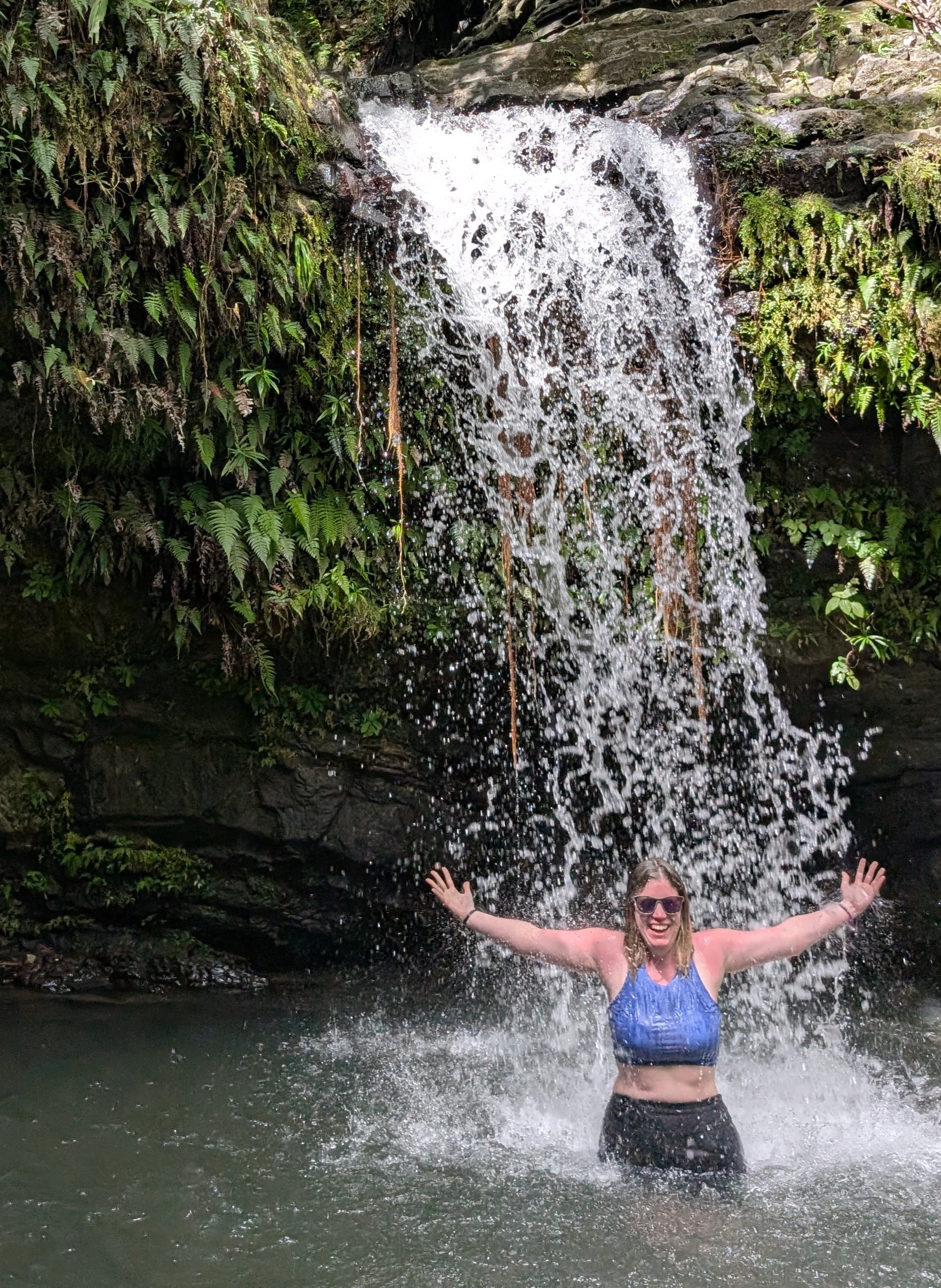
What she can do now tells the rest of the story. The hot-headed college student who wanted to run through walls has settled into something better: an hour or two of real, sustained movement every day that she actually enjoys. She is the first one on the pickleball court and the last to leave. She lifts, loves water aerobics with Hedy and Tori, dances salsa, hikes, and reluctantly jogs. "My cardiac output has increased significantly," she says, "but I still hate running." She squeezes in Eagles (Go Birds!) games with her friends whenever she can. Before surgery, she could not run a mile. Now she lives the life her heart finally has room for.
"I have a 100% success rate of getting through bad days," she says. "After everything I've been through, of course I've got this."
That is exactly the person who now sits on the other side of the table, asking patients to share their stories so others can find their way to research and treatment. Every time she does, she holds onto something: somewhere out there, a person who has never heard of their condition is going to read their words and feel something shift. The fear gets a little smaller. The path forward gets a little clearer. They realize they are not alone.
That is exactly who she shows up as now.
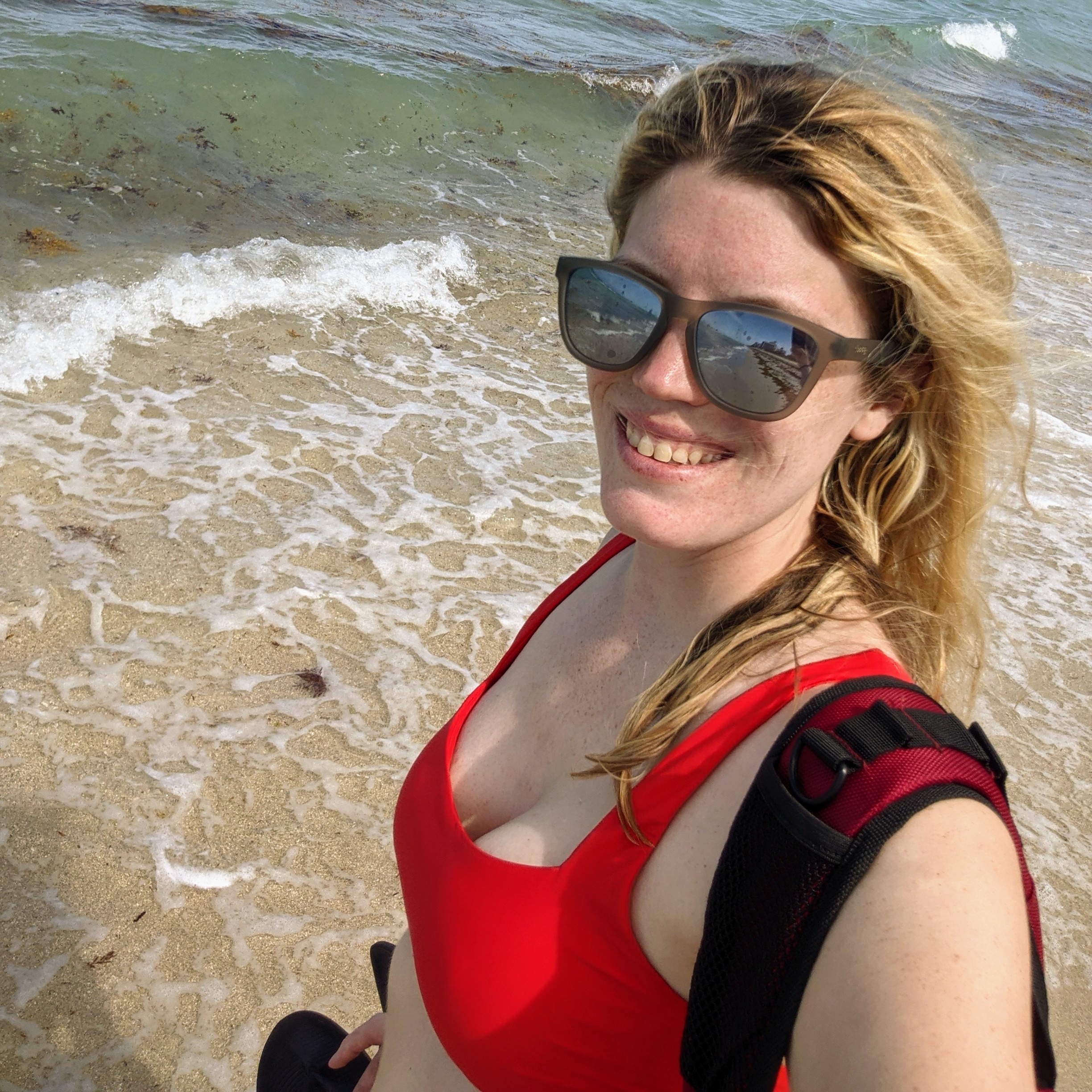 About Rebecca UhlPatient Marketing Executive at PatientWingRebecca Uhl is a Patient Marketing Executive at PatientWing. She has been a pectus excavatum advocate for over a decade and continues to support the community alongside her work in patient education and clinical research outreach.